|
| |
|
|
|
  |
| |
|
|
|
|
|
|
PROIECTE
ȘI PARTENERIATE INTERNAȚIONALE |
|
|
|
|
|
|
|
 |
|
|
|
|
|
|
|
2019-2020
School Year |
|
|
|
BSO Projects |
|
|
|
Sister School
Project
|
|
 |
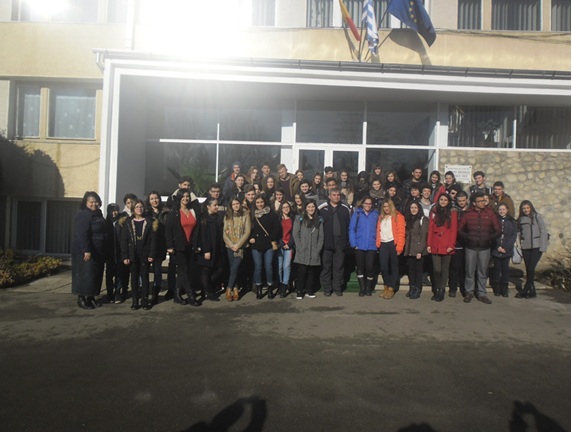
The second stage of the Romanian-Turkish international
educational partnership project, Sister School Project, ran from
1st September 2018 to 1st September 2023, one of the objectives
being the exchange of students and teachers for educational
visits to share ideas and experiences, providing opportunities
to develop skills that improve relations between Romania and
Turkey. Our Turkish partners visited us twice, and now it was
our turn to participate in such an exchange. Therefore, a group
of students and teachers participated in the educational visit
to Babaeski, Kırklareli province, between 5th to 10th January
2020.
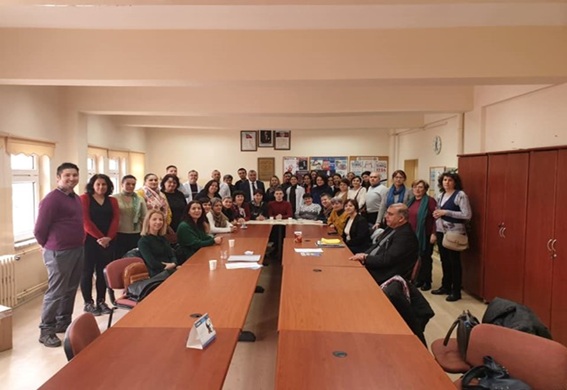
The first day was devoted
to meeting the students and teachers from the host educational
institution. The Turkish students prepared informative materials
in the form of PPT presentations about their town, historical
sites in Babaeski, their high school, and the places we were
going to visit in Istanbul, thus helping to explain and
understand the cultural and historical aspects of the cities we
were going to visit and the country we were in.
Romanian teachers
had the opportunity to learn about several aspects of the
Turkish education system by participating in teaching
activities, engaging in dialogue with teachers from the host
high school, and exchanging information about the curriculum,
teaching resources, course materials and teaching strategies,
school policy and school events. At the same time, the
principals of the two educational institutions discussed and
shared their experiences regarding management development. The
students spent time with their friends, experiencing a day at
school in Turkey, developing their social and communication
skills, and practicing their English language skills.
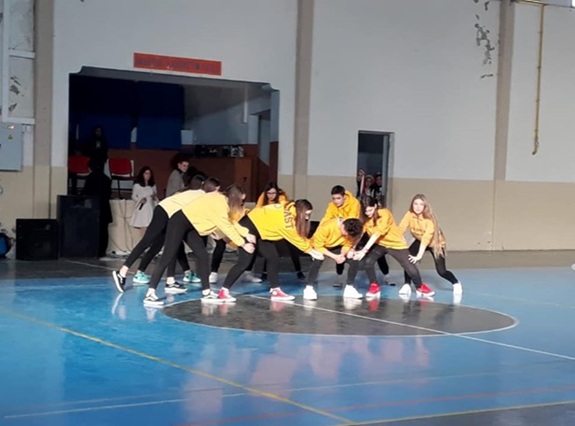
The activities aimed
at developing friendship with different cultures and enriching
the students' experience were varied, one of them being the
joint artistic program carried out by Turkish and Romanian
students. The artistic moment provided by the Romanian teachers'
vocal group was particularly appreciated by the teachers from
Turkey. They were impressed by the involvement of their Romanian
colleagues in all partnership activities and by the support and
encouragement they gave to their students.
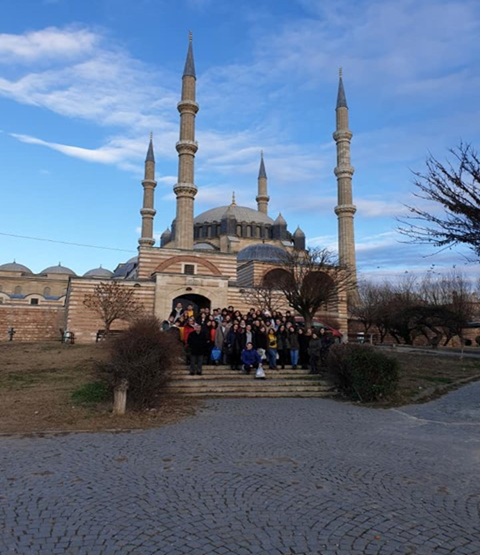
During the mobility period,
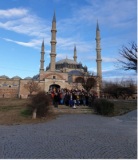
study visits were made to Edirne and Istanbul. The Health Museum
and Selimiye Mosque were visited in Edirne, Hagia Sofia and
Topkapı Palace were visited in Istanbul. The trip on the
Bosphorus was also an opportunity to admire several historical
sites along the shore: the Sultan Ahmed Mosque, Hagia Sophia,
Topkapı Palace, and Dolmabahce Palace.
The project activities ended with a
farewell party organized by the Turkish students for their
partners and friends. This meeting gave all participants the
opportunity to develop the ability to communicate effectively
and appropriately in different situations using English. The
students became more aware of their own culture and more
informed about their partners' culture. Intercultural awareness
provides them with the knowledge and skills necessary to enable
them to establish links with other cultures, to present and
represent their own culture to others. The relationship between
different cultures enriches not only people but also societies.
|
|
|
|
|
|
|
|
Top three
Genetically Modified (GM) crops grown in India and Romania
|
|
|
 |
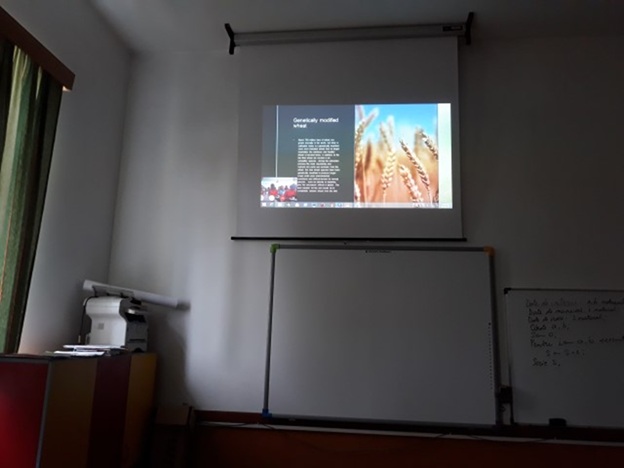
At the beginning of the 2019-2020 school year, we established
contacts with schools registered on British Schools Online
through the British Council Schools Partner Finder with a view
to carrying out collaborative projects. "Top three Genetically
Modified (GM) crops grown in India and Romania" is a project
carried out in partnership with Vriksha Global School in India,
with the aim of studying the different types of genetically
modified crops grown in India and Romania and learning about the
process behind these crops, their advantages and disadvantages.
The participants in this activity were the
9th B graders. They gathered information about the different
types of genetically modified crops, the species that contain
genes that make them resistant to herbicides, insects, etc., and
evaluated and analysed different traits used in the production
of genetically modified crops. They determined the top three
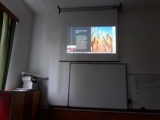
genetically modified crops and created PowerPoint presentations:
The Top Three GM Crops Grown in Romania, The Advantages of Using
GM Crops, and The Disadvantages of Using GM Crops. Through a
Skype conference, students from both schools presented their
work in turn, and at the end they had a discussion about the
advantages and disadvantages of genetically modified crops. |
|
|
|
|
|
|
|
Self-Introduction
|
|
|
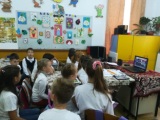 |
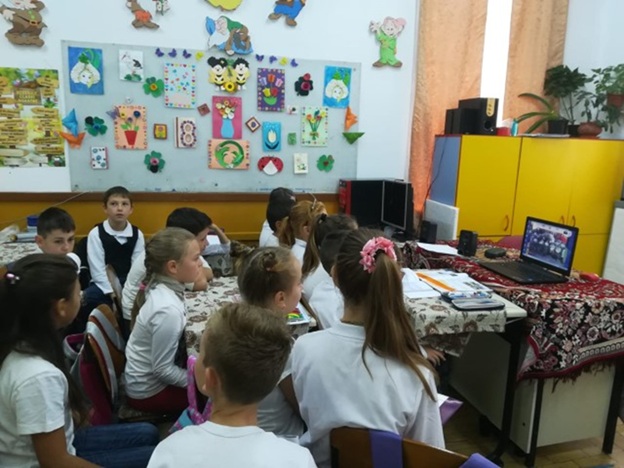
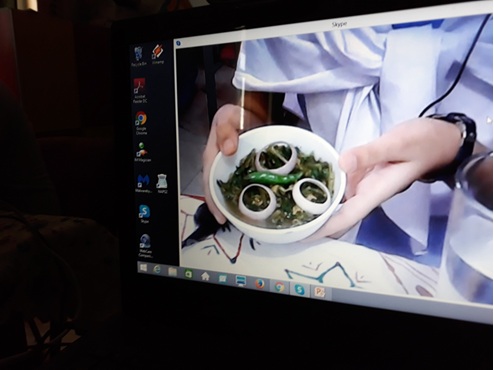
Another collaborative project was carried out by the 4th A
graders together with their partners from The Mann School in
India. It involves monthly meetings via Skype video conferences
on different topics. During the first meeting on the topic of
Self-Introduction, each participant answered the following
questions: What is your name? What is the name of your school?
How old are you? What is your school logo? Where is your school
located? Which grade are you in? This meeting was followed by
others, namely: My Family, My School, My Favourite Dish. During
each Skype video session, each participant presented their
family members, school, classroom, favourite subject(s),
favourite school, extracurricular, and extracurricular
activities, and favourite dish, using drawings and collages.
These activities gave students the opportunity to learn new
things about their partners' families, lifestyles, daily
schedules, school activities, favourite and traditional dishes,
and what healthy eating means to them. They also gave them the
opportunity to develop their English communication skills in
real-life situations, to socialize with their partners, and to
use new forms of communication and technologies effectively and
efficiently. |
|
|
|
|
|
|
 |
Traditional
Romanian Food and Clothing
|
|
|
 |
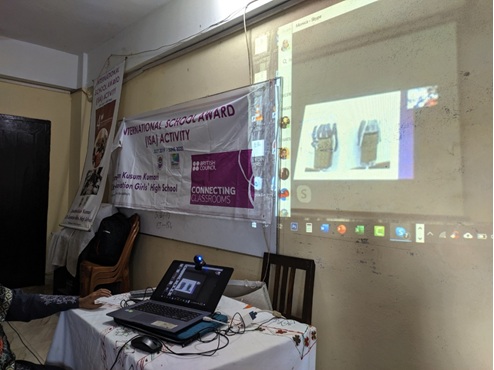
Jamalkhan Kusum Kumari City Corporation Girls'
High School Rahmatgonj,
Chattogram, Bangladesh was our partner in another collaborative
project, the aim of which was to learn about some cultural
aspects related to traditional food and clothing in Bangladesh
and Romania. Participants in this activity were the 7th
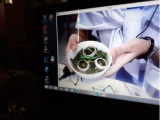
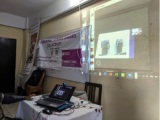
graders and the 9th A graders. In the PPT
presentation entitled Traditional Romanian Food, the
seventh-grade students provided details about the foods used in
Romanian cuisine, the dishes served at the three main meals of
the day, as well as those cooked on different occasions:
Christmas, New Year, Easter. The ninth-grade students
highlighted several aspects related to the geographical location
of our country, climate, flora and fauna, natural fibers used in
the manufacture of traditional clothing, and described the
Romanian national costume in the PowerPoint presentation
entitled Traditional Romanian Clothing. Through a Skype
conference, students from both schools presented their work in
turn, and at the end they had a discussion about the materials
they had viewed. |
|
|
|
|
|
|
|
2018-2019 School Year |
|
|
|
eTwinning Project |
|
|
"Hello, I am Charlie from London!" |
|
 |
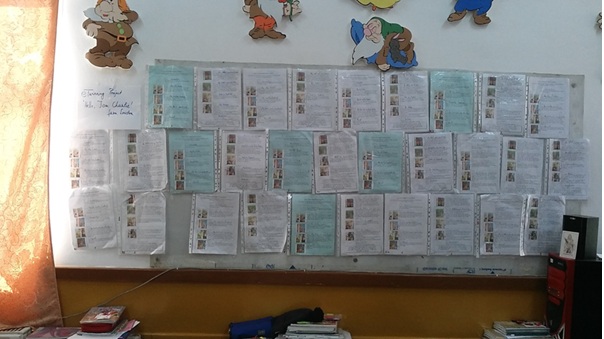
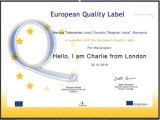
The "Hello, I am Charlie from London!" project, based on the
book of the same name by Stephane Husar and Yannick Robert,
carried out on the eTwinning platform gave the 3rd A graders the
opportunity to create their own books inspired by it, talking
about themselves, their families, their cities, and their daily
routines, and the tasks they completed gave them the chance to
express themselves in real-life situations. The partners were
students from Bulgaria, Croatia, France, Greece, Italy,
Lithuania, Serbia, and Ukraine.
The project activities brought together students and
teachers from different cultural backgrounds and education
systems, uniting participants who speak different languages and
communicate using different codes. After reading the book
"Hello, I am Charlie from London!" and discussing the objectives
of this project, the students were eager to create their own
book, but also to read their partners' books. Each book was
presented in Twinspace. Reading their partners' books online and
voting for the best book on https://www.tricider.com/ were the
most interesting activities for them. In terms of results, this
gave students the opportunity to consolidate their knowledge of
English and their language skills through a series of
activities, to develop their critical thinking, and to be
challenged to rethink and reevaluate their own opinions about
their personal skills and abilities.
The "Hello, I am Charlie from London!" project helped
students develop self-awareness, feel part of a European
community, and make new friends to discover differences and
similarities between other children's lifestyles, increasing
their motivation to study English. We would like to mention that
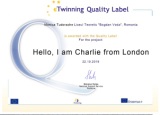
for the outstanding results gained in this project, we received
the Natio. |
|
|
|
|
|
|
|
|
|
|
|
The Sister School
Project
|
|
|
 |
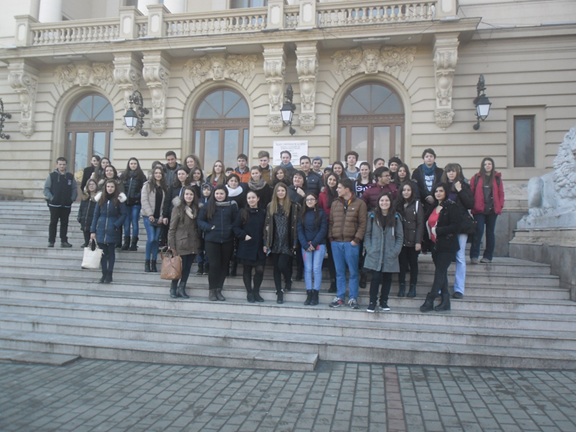
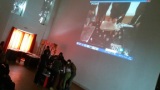
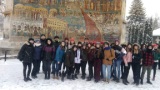
The second stage of this partnership ran from 1st September 2018
to 1st September 2023. This time, on 21st January 2019, a group
of twenty students and five teachers arrived in Hălăuceşti.
During the first day of the visit, the students and teachers
from the two educational institutions introduced themselves and
provided details about their schools, localities, and some
aspects of their culture.
Once again, the Turkish partners expressed their
desire to learn about some aspects of the Romanian education
system. The demonstration lessons they attended were full of
excitement, had a strong impact on the participants, and sparked
curiosity and sometimes amazement. Participation in these
teaching activities was very interesting and useful from an
educational and social point of view for everyone involved. The
Turkish partners were able to compare their own education system
and draw a number of conclusions, one of which was that,
although they share a common basis, the two education systems
can differ greatly.
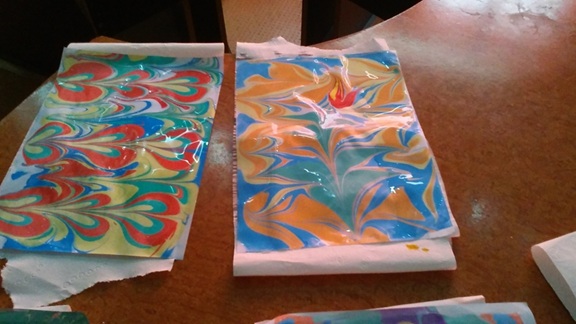
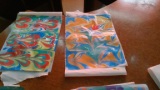
Among the activities designed to enrich the
students' experience and raise their awareness of cultural
diversity, we mention the presentation by students from Turkey
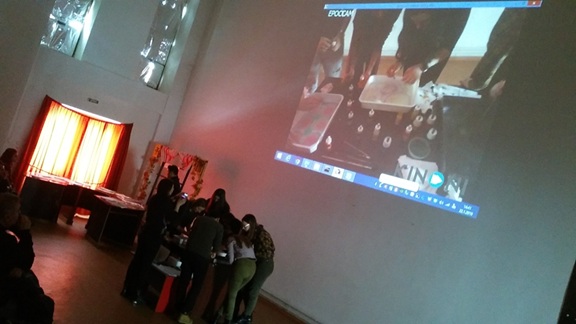
of the Ebru painting technique, which consists of creating a
pattern from colours floating on the surface of water. Paper is
placed on this surface, absorbing the paints floating on the
water and thus transferring the pattern. After learning the
technique and with the help of their partners, our students
created several paintings of this kind. The joint art program
carried out by the students from the two partner high schools
demonstrated that young people, regardless of their origin, are
talented and share a common interest in dance and music. By
bringing together aspects of the two cultures, all students had
the opportunity to increase their knowledge of their partner's
culture in terms of people's lifestyles, values, attitudes, and
beliefs, and how these are manifested or expressed.
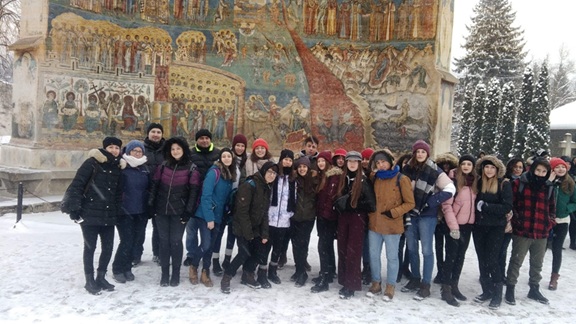
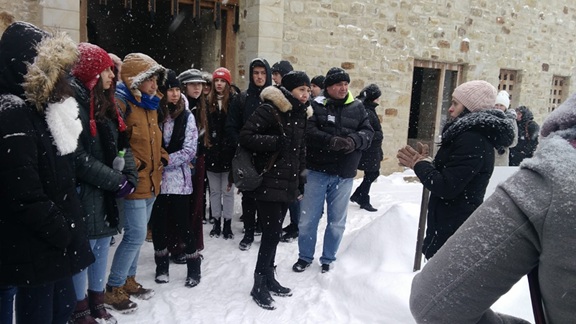
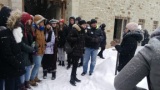
This time, study visits were made to Voroneț Monastery,
Suceava Fortress, the Union Museum in Iași, and the Palace of
Culture in Iași, where all four museums were visited: the Museum
of Moldovan History, the Ethnographic Museum of Moldova, the Ștefan
Procopiu Museum of Science and Technology, and the Art Museum.
The project activities ended with a surprise farewell party
organized at Muncel Camp by the students from Hălăucești for
their partners and friends from Turkey. |
|
|
|
|
|
|
|
|
|
|
|
2017-2018 School Year |
|
|
|
BSO Projects |
|
|
|
Dressing in the
Colours of the World, Schools Online Collaborative Project
|
|
|
|
|
|
|
|
The project was aimed at primary school pupils and was carried
out in partnership with Dayanand Anglo-Vedic Public School,
Jasola Vihar, New Delhi, India. As part of the project, students
identified the national costumes of India, Japan, Turkey, Spain,
the Netherlands, and Romania, learned about the various types of
fibers used in creating the costumes and their relevance to the
climate and soil of the respective country, analysed the
relationship between climate and national costume, and evaluated
different types of plant and animal fibers available in various
countries. They also researched national costumes, gaining new
knowledge about style, colour combinations, and the materials
used in their manufacture. At the end of the project, a
traditional costume parade was organized where students
presented the costumes they had made, with the help of their
parents, from reusable materials. |
|
|
|
|
|
|
|
|
|
|
|
|
|
2015-2016
School Year |
|
|
 |
Sister School Project |
|
|
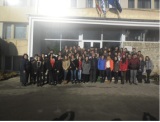
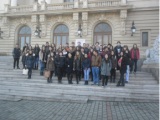
The Sister School Project is a collaborative partnership between
"Bogdan Vodă" Theoretical Highschool, Hălăuceşti and Şehit Ersan
Yenici Anadolu Lisesi Babaeski, Turkey, with a view to
developing mutual understanding, friendship, and promoting a
better understanding of the economy, culture, history,
environment, and customs of the two countries and the schools
involved. Among the key principles underlying this partnership
are: recognition and respect for the educational needs of each
school, open communication, collaboration based on trust and
mutual respect, and appropriate and realistic expectations. The
objectives are to strengthen relationships, understanding, and
appreciation between teachers and students, increasing cultural
awareness and respect for cultures, developing English
communication skills, and developing an international
perspective within schools, aim to enable students to become
citizens with the ability to function effectively in cultures
with different perspectives and belief systems.
The first stage of this partnership took place
between 1st September 2015 and 31st August 2018. On 25th January
2016, a group of twenty-five students and five teachers arrived
in Hălăuceşti. On the first day of the visit, the students and
teachers from the two educational institutions introduced
themselves and provided details about their school, locality,
and some aspects of their culture.
Experiencing the teaching-learning process in Romania was
another activity included in the schedule of the Turkish
partners' visit, which took place between 25th January and 31st
January 2016. The Turkish partners, both teachers and students,
showed interest in the topics presented, were open-minded,
enterprising, and willing to learn more about us and Romania.
The questions that followed generated discussions that took
place at the end of the activities, opinions were expressed
concisely by both sides, bringing the participants in this
project closer together and establishing personal relationships
both within and outside the partnership.
This was followed by visits to SC. ROMPAK SRL,
Pașcani, the "A. I. Cuza" Palace in Ruginoasa, the Ruginoasa
Cultural Centre, which houses a veritable ethnographic museum
dedicated to local values and traditions, the "Anastasie Fătu"
Botanical Garden in Iași, the "A.I. Cuza" University in Iași,
the Metropolitan Cathedral in Iași, the Cathedral of the Holy
Virgin Mary, Queen, in Iași, and the Monastery of the Three
Hierarchs in Iași. During these study visits, the students had
the opportunity to talk to each other, discussing the music they
listen to, their passion for art, science, physics, chemistry,
their way of life, traditions, and customs.
The first year of collaboration represented an
opportunity for the teachers involved to develop their teaching
skills through an exchange of experience, to interact directly
with colleagues from the partner school, an extremely
interesting opportunity to broaden their professional horizons
through direct knowledge of an educational system different from
the Romanian one. This experience was also interesting and
useful for the students, contributing to the development of
their interest in acquiring new knowledge, communication skills
in a foreign language, the effective and efficient use of new
forms of communication and new technologies, socializing with
project partners and transferring knowledge, and the formation
and development of cultural and historical awareness. |
|
|
|
|
|
|
|
|
|
|
The Culture
Exchange Program Agreement
|
|
|
The Culture Exchange Program Agreement is a collaborative
partnership between Bogdan Vodă High School in Hălăuceşti and
Cheery Children's Education Centre in Nairobi, Kenya. Promoting
a better understanding of the culture, history, and customs of
the partner countries and schools, developing tolerance towards
different cultures, English communication skills, teamwork,
socializing with project partners, promoting our school, region,
and country and our partners, increasing motivation to learn a
foreign language are just some of the aspects considered in this
collaboration.
The activities carried out during the
partnership gave our students the opportunity to develop their
intercultural skills and acquire new knowledge about the
culture, way of life, and education system of our partners. The
students presented their country, providing details about its
geographical position, climate, relief, flora and fauna, their
locality, school, lifestyle and daily routine, etc., through
drawings, posters, collages, and PowerPoint presentations. They
also exchanged letters, greeting cards, etc. There were frequent
Skype meetings where both students and teachers had the
opportunity to discuss various pre-determined topics.
|
|
|
|
|
|
|
|
|
|
|
2014-2015 School Year |
|
|
|
eTwinning
Project |
|
|
|
The Career Project
|
|
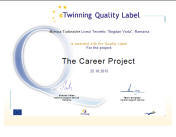 |
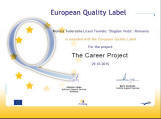
The project was based on MOOC (Massive Online Open Courses)
modules and was developed by David Winter and Laura Brammar,
collaborators at the University of London, with the aim of
providing guidance and personal development, allowing high
school students to explore their personality traits. The choice
of this theme had numerous objectives, such as strengthening
self-image and clarifying incentives, abilities, skills,
competencies, and values. Nine high schools in Greece and three
in the EU were involved in the project.
The project encouraged an integrated approach to
the learning process, giving students the opportunity not only
to use the knowledge and techniques learned in different
subjects - English grammar, how to write a letter of intent in
English, information and communication technology - but also to
organize this knowledge in a personal way. They worked in
groups, thus promoting the value of collaborative learning, with
cooperation involving the participation of all students in
completing a task on a specific topic. At the same time, working
in groups gave them the opportunity to improve their
communication skills, tolerance for others' opinions, democratic
decision-making, conflict resolution skills, and acceptance of
others. The partners communicated in the Twinspace workspace,
discussing the tasks set for each module.
Collaboration was a necessary condition for
achieving the objective of student creativity. The active
participation of all partners in each module and in the final
task illustrates this aspect. Romanian students actively
participated in the Skype conference organized as part of the
event held in Athens, with the aim of disseminating the project
results to participating teachers and students.
In terms of the project's results, it gave
students the opportunity to consolidate their knowledge of
English and their skills in using it through a series of
activities. They also benefited from using ICT knowledge and
skills, which facilitated effective communication and
collaboration in an environment simulating real-life conditions.
At the same time, the project helped them develop critical
thinking, as they were put in a position to rethink and
reevaluate their own opinions about their personal skills and
abilities.
In the same way, teachers cooperated closely, opening
up the possibility of collaboration on future projects. Learning
with and from others was particularly important in helping
participants appreciate the value of a joint effort. The Career
Project was a real-life tool that helped participants develop
self-awareness and familiarize themselves with modern trends in
career guidance. Lifelong learning became a reality through our
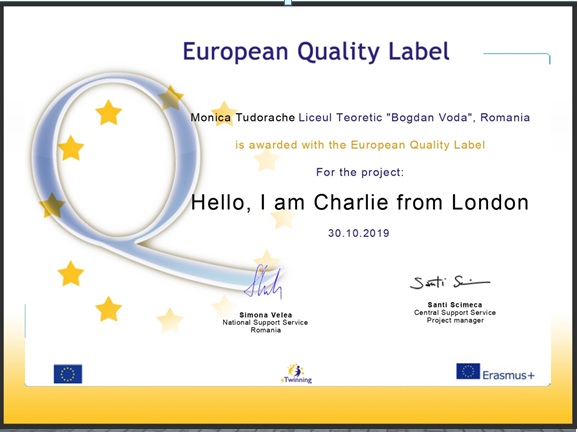
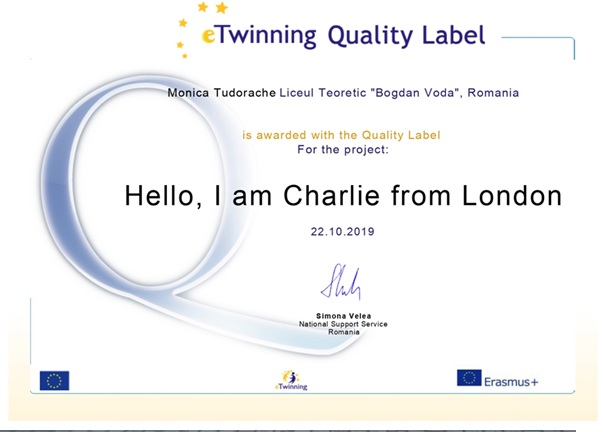
joint efforts. We would like to mention that this project
received the eTwinning Quality Label and the European Quality
Label. |
|
|
|
|
|
|
|
APEC Cyber
Academy Project |
|
|
|
A Special Woman in our Community
|
|
|
|
As part of the project, the 10th A graders identified and
selected a woman who is special in terms of her contribution or
status in our country. They researched the role, status,
contribution of women in different career fields, and their
responsibility in the community. They gave a brief presentation
of the woman at various points in history, focusing on the one
they considered to have had the most significant impact on life,
culture, and education: Sofia Ionescu, the world’s first female
neurosurgeon. Important things about her medical work were
mentioned, as well as the awards she received at home and abroad
in recognition of her successful work.
Developing English communication skills,
digital skills, teamwork skills, socializing with project
partners, sharing info and knowledge, interacting and
cooperating with students from Taiwan were some of the main
goals of the project. |
|
|
|
|
|
|
|
2013-2014 School Year |
|
|
|
APEC Cyber Academy Project |
|
|
|
|
|
|
|
Sustainable Culture Heritage Development
|
|
|
|
Based on the definition of culture and UNESCO, the 9th A graders
identified, selected, and presented the main cultural objectives
belonging to world cultural heritage and Romanian cultural
heritage, the main sources of pollution worldwide, the sources
of pollution with the greatest impact on the natural and
anthropic environment worldwide, the elements of the natural and
anthropic environment included in the phenomenon of sustainable
development, the most representative elements of the Romanian
environment included in the phenomenon of sustainable
development, etc. Our students actively participated in the
Skype conference organized by the project initiators and
coordinators, with the aim of disseminating the results to
participating teachers and students.
Among the main objectives of the project are
practicing and developing English communication skills, digital
skills, teamwork skills, socializing with project partners,
transmitting information and knowledge, communicating,
interacting, and cooperating with students from participating
countries, namely Taiwan, the Philippines, South Korea, and
Romania. |
|
|
|
|
|
|
|
|
|
|
|
2012-2013
School Year |
|
|
|
eTwinning Projects |
|
|
|
|
|
|
|
Meet Me Through My
Writing
|
|
|
|
The project was carried out in collaboration with students from
a school in Croatia and aimed to development of literacy and
language skills through writing poems, prose and dramatic texts
through which they can meet the individual's interests,
fantasies, desires, dreams, attitudes about life and everyday
living situation. The students wrote a letter to a pen/e-friend
introducing him/herself, talking about his/her likes and
dislikes, interests, hobbies, school, about homeland ("Homeland
in my eyes" - prose or poetry), and writings on free subjects:
family, school, love, hobbies, interests, etc. They also
exchanged Christmas cards and wishes. The 8th A graders had the
opportunity to learn about new culture, school system, and make
new friends. |
|
|
|
|
|
|
|
We Can't Forget
Our Past
|
|
|
|
The project was carried out in collaboration with students from
Bulgaria, Italy, Latvia, Lithuania and Poland and it aimed
to create a cultural-historical consciousness, to help students
acquire the concept of time and change, recover and rebuild its
past, past civilization in fashion, traditions play in
technology, consider the popular traditions, rebuild local
identity, get children interested in the historical memory, to
encourage pupils to use new technologies efficiently and
effectively, to socialize, to develop their commutative skills,
to become more confident when using English. The project was
only on two particular areas: the game and fashion.
The activities carried out by the 4th A
graders were meant to make the pupils aware of the fact that the
game is the basic activity of childhood, to give them the
opportunities to play the games of their parents' childhood, to
know and to describe the clothing, to compare and contrast
children's clothing of today with those of the past: school
uniforms, folk costumes worn on special occasions, everyday
clothing, and so on. |
|
|
|
|
|
|
|
Culture And Cooking
|
|
|
|
This project was about exchanging information about culinary
tradition giving the students involved to opportunity to know
people and culture from another country. It was carried out by
the 8th A graders and it was conducted in collaboration with a
school in Poland. Our students prepared short article on the
following topics and posted them on eTwinning: Romanian everyday
cuisine - popular dishes, drinks and ingredients, Romanian
regional cuisine - different tastes in different part of the
country, Romanian hospitality - how do we receive guests and how
should one behave during a visit, Romanian sweets and cakes, The
Lent, Romanian Easter/Christmas cuisine, Romanian customs and
traditions at Easter/Christmas, Celebrating Easter/Christmas.
The project ended with a presentation about the culinary
tradition of the partner country and a traditional meal. |
|
|
|
|
|
|
|
British Council Connecting Classrooms Projects
Climate Change: How Can We Help?
|
|
|
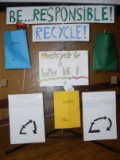 |
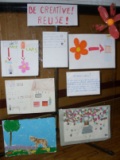
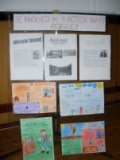
The project, carried out with primary school students and
coordinated by a school in Argentina, encouraged students to
become more aware of climate change and to behave in a more
careful and responsible manner towards the environment.
Alongside our highschool, educational institutions from the UK,
India, Taiwan, and Bangladesh also participated.
The activities carried out aimed to raise
students' awareness of the change they can bring about and the
importance of individual commitment as a way to make our planet
a better place to live, so that they become active supporters of
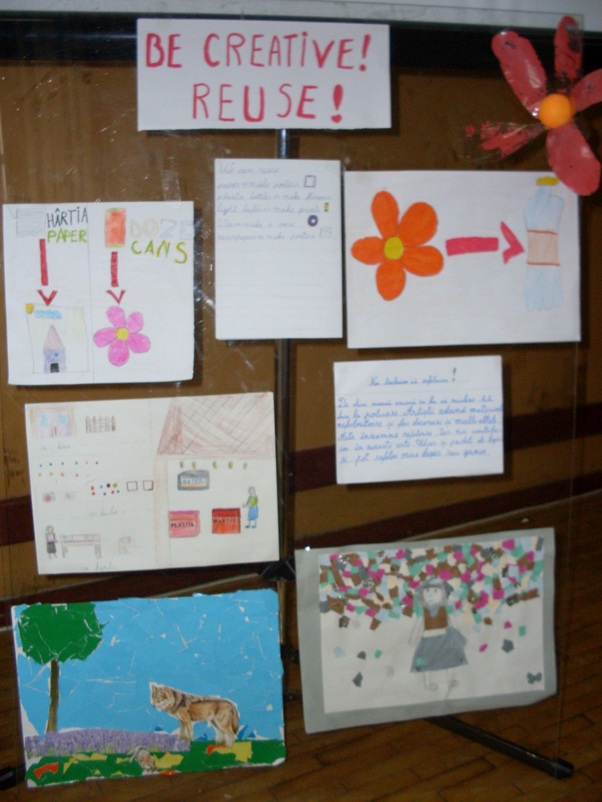
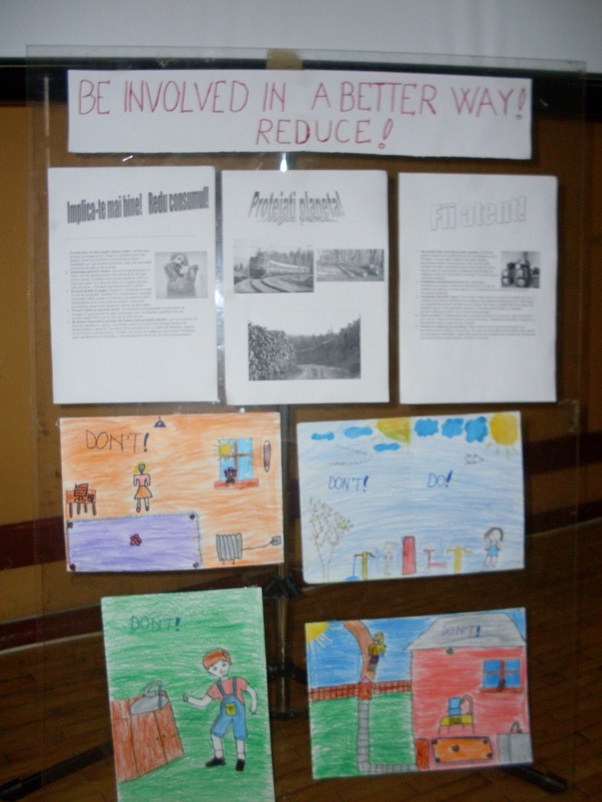
"green habits" and promote change. Human activities cause
climate change. As the human population grows, so does our
consumption of the Earth's resources and the waste we produce.
By reducing our consumption of materials such as paper,
cardboard, and plastic bottles, we can eliminate most of the
carbon dioxide (CO2) produced throughout their life cycle. Reuse
eliminates all CO2 emissions except those associated with
initial production, reducing consumption decreases pollution and
the rate of growth of landfills, recycling reduces the need for
new raw materials, conserves valuable resources, and saves the
energy consumed in the extraction, transport, and initial
refining, leading to a substantial reduction in CO2 emissions.
Participation in this project gave participants the
opportunity to integrate the main concepts of global dimensions,
namely:
global citizenship - acquiring the knowledge, skills,
and understanding of concepts necessary to become informed,
active, and responsible citizens; appreciating the global
context of local and national issues and decisions at a personal
and social level;
sustainable development - understanding the need
to maintain and improve the quality of life without harming the
planet for future generations; recognizing that some of the
Earth's resources are finite and therefore must be used
responsibly by each of us; considering the likely and desirable
future and how to achieve it; appreciating the importance of
sustainable resource use - rethinking, reducing, repairing,
reusing, recycling - and sourcing materials from sustainably
managed sources.
interdependence - understanding how people, places, and
environments are all inextricably interdependent and that
choices and events have global repercussions; appreciating the
connections between the lives of others and the lives of
children and young people; understanding how the world is a
global community and what it means to be a citizen.
At the same time, students understood how the way and
place they live are connected to other places in the world,
developed their knowledge about environmental changes and
sustainable development, about the life processes common to
humans, and about the ways in which living things and the
environment must be protected. They learned about themselves as
members of a community, with rights and responsibilities towards
themselves, others, and their environment, and understood that
they have an active role in their communities. In order to
communicate their observations, ideas, and feelings and to
complete their assignments, the students approached and used a
variety of methods. |
|
|
|
|
|
|
|
Rights And Responsibilities:
Superheroes of the Millenium
|
|
|
|
This
project, coordinated by a school in Argentina and aimed at
secondary school students, sought to raise students' awareness
and understanding of their rights and responsibilities and
prepare them to become responsible and engaged citizens.
Partners included educational institutions in Argentina, India,
Taiwan, Venezuela, and Romania.
Children's rights are defined in the Convention on the Rights of
the Child (CRC) as the conditions that children must have for
their survival, development, and optimal protection. Rights are
basic human needs and values that apply or should apply to
everyone, have limits, and we must teach children to consider
the rights of other children and adults. With rights come
responsibilities. Through the activities carried out, students
learned to respect their own rights and those of others, to take
responsibility for themselves, and to develop critical thinking
skills and make informed decisions. In a school that teaches
them about their rights, they will develop positive attitudes
towards school, better relationships with their peers and
teachers, and high self-esteem, which will protect them against
all forms of child abuse.
Participation in this project
gave participants the opportunity to integrate the main concepts
of global dimensions, namely: global citizenship - acquiring the
knowledge, skills, and understanding of concepts and
institutions necessary to become informed, active, and
responsible citizens; conflict resolution - understanding the
nature of conflicts, their impact on development, and the
reasons why they need to be resolved and harmony promoted; human
rights - knowledge of human rights, including the UN Convention
on the Rights of the Child; diversity - understanding and
respecting differences and relating them to our common humanity. |
|
|
|
|
|
|
|
|
|
|